The Drone Design Process
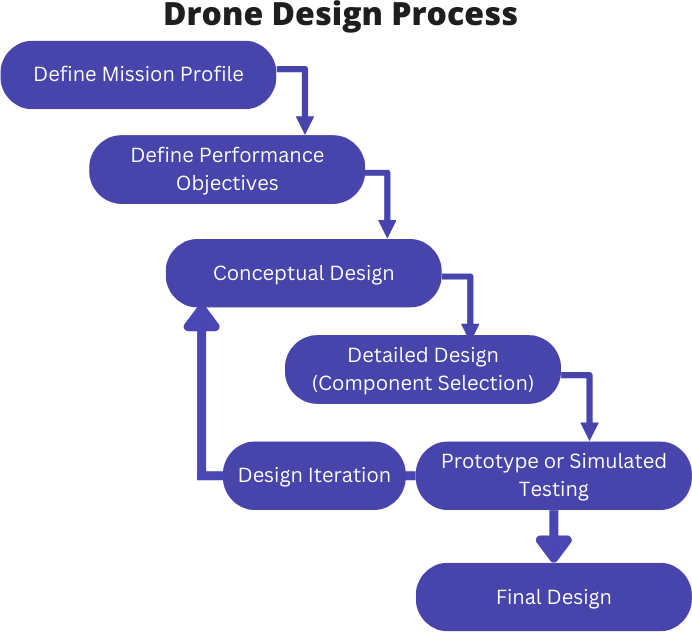
El proceso de diseño de ingeniería de drones sigue los siguientes pasos:
-
Definir el perfil de la misión: Este paso se centra en identificar claramente el propósito previsto del dron y su contexto operativo, como carreras, vuelo libre, vigilancia o entrega. Implica especificar el entorno de vuelo (por ejemplo, interior, exterior, urbano o rural), la autonomía requerida, la duración del vuelo, las necesidades de carga útil y cualquier tarea o restricción específica que el dron deba abordar.
-
Definir los objetivos de rendimiento: Una vez establecido el perfil de la misión, este paso se centra en establecer objetivos de rendimiento medibles, como velocidad máxima, resistencia, capacidad de carga útil, estabilidad y maniobrabilidad. Estos objetivos guiarán el proceso de diseño en adelante. 3. Diseño Conceptual: Con base en los objetivos de diseño, tome decisiones iniciales de diseño de alto nivel, como el tipo de fuselaje y la configuración que se utilizará (p. ej., cuadricóptero, hexacóptero), las cargas útiles que se transportarán y las características clave. Tome estas decisiones basándose en su conocimiento de las ventajas y desventajas de cada opción y en los objetivos específicos del diseño.
-
Diseño Detallado y Selección de Componentes: Elija componentes específicos que cumplan con los requisitos de diseño, como motores, hélices, ESC, batería, controlador de vuelo y carga útil. Utilice herramientas de simulación como SIMNET para predecir el rendimiento del vehículo con los componentes elegidos y encontrar la mejor combinación de componentes.
-
Pruebas de Vuelo: Construya un prototipo físico o utilice herramientas de simulación para probar el diseño en vuelo. Evalúe el rendimiento, la estabilidad y la capacidad de respuesta en las condiciones operativas previstas, identificando áreas de mejora. 6. Iteración del Diseño: En esta etapa, es posible que deba volver a la Selección de Componentes o incluso al Diseño Conceptual para actualizar sus selecciones originales según las observaciones de las pruebas de vuelo. Continúe iterando hasta obtener un diseño final viable.