Página
Exploring Multicopter Drone Types
Requisitos de finalización
Multirotor Drone Types: An Overview
Multirotor drones are versatile, easy to maneuver, and widely used in various industries. Their design allows for stable flight, even in confined spaces, making them ideal for tasks ranging from aerial photography to delivery services. Depending on the number of rotors and their specific configurations, multirotor drones come in several types, each suited for different purposes and performance levels. Below is an overview of the most common types of multirotor drones:
-
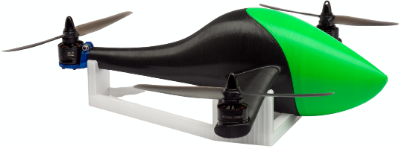
Tricopter (3 Rotors)
Tricopters are lightweight and agile, with three rotors arranged in a Y-shape. They are simpler in design but require more complex flight control to maintain stability. These drones are popular for hobbyists due to their lower cost and decent flight performance.

-
Quadcopter (4 Rotors)
The most popular multirotor type, quadcopters feature four rotors in an X or + configuration. They offer a perfect balance between stability, payload capacity, and flight duration, making them ideal for photography, recreational use, and light industrial tasks.
-
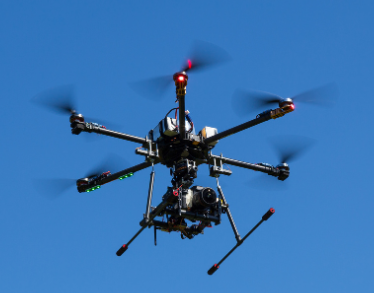
Hexacopter (6 Rotors)
With six rotors, hexacopters provide greater lift capacity and redundancy. They can carry heavier payloads and remain airborne even if one motor fails, making them suitable for professional applications like aerial mapping and equipment transport.
-
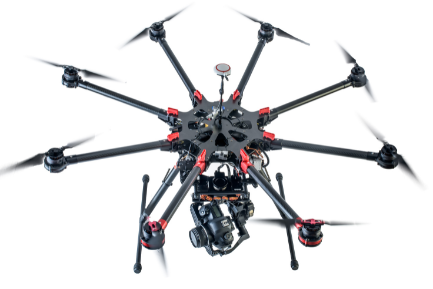
Octocopter (8 Rotors)
Octocopters are designed for heavy-duty operations, offering unmatched stability and power. They can lift substantial payloads, making them perfect for cinematography, industrial inspections, and emergency response. Their redundancy ensures they can handle motor failures without compromising flight safety.
-
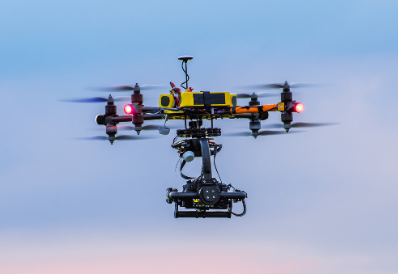
Coaxial Multirotors
Coaxial drones feature paired rotors stacked vertically, effectively doubling the rotor count. This design increases thrust efficiency and reduces the drone’s overall size, often used in compact, professional-grade drones.
Each type of multirotor has its strengths and trade-offs, making it important to select the one that aligns with specific use cases and operational requirements.
Última modificación: Saturday, 8 de March de 2025, 21:15