Exploring Search and Rescue Drones
How Search and Rescue Drones Differ from Other Types of Drones
Search and rescue (SAR) drones are specially designed to assist in finding and helping people in emergency situations. Unlike other types of drones, SAR drones are built for reliability, real-time situational awareness, and operating in challenging environments. Let’s explore what sets them apart:
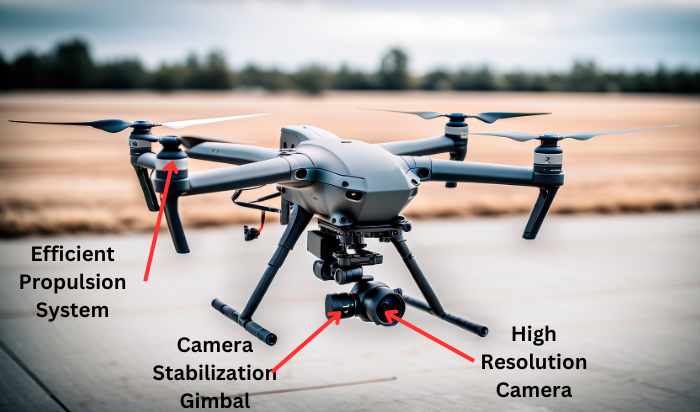
- Sensors and Imaging Equipment
The most important part of a search and rescue drone is its sensing and imaging capabilities. These drones often carry thermal cameras, zoom lenses, and low-light sensors, allowing them to detect heat signatures, identify movement, and locate people even at night or through smoke and fog. Cameras are mounted on stabilized gimbals to maintain a clear and steady view, regardless of drone movement. This stability is critical when scanning large areas or zooming in to identify a person or object.
Design and Performance
SAR drones are built for endurance, stability, and adaptability. They often feature robust frames that can withstand wind, rain, and rough landings. Large propellers and efficient motors allow them to hover steadily and stay in the air for extended periods—typically 20 to 40 minutes or more. Some models are designed to carry payloads such as life vests, medical kits, or two-way radios. Their design prioritizes flight stability and power efficiency to support critical operations in unpredictable conditions.
Advanced Flight Capabilities
Search and rescue drones often include autonomous and semi-autonomous flight features to assist responders. These may include GPS-based waypoint navigation, terrain following, return-to-home failsafes, and geofencing. Some drones can automatically scan pre-defined grids or follow heat signatures. These features reduce the workload on the operator, allowing them to focus on analyzing data and coordinating the rescue effort. Unlike racing drones, SAR drones are not meant for manual acrobatics but for precise and mission-driven tasks.